


Behind every House lies a family of identities.

Some are inherited. Some are performed.

Some are protected. Others are barely kept under control.

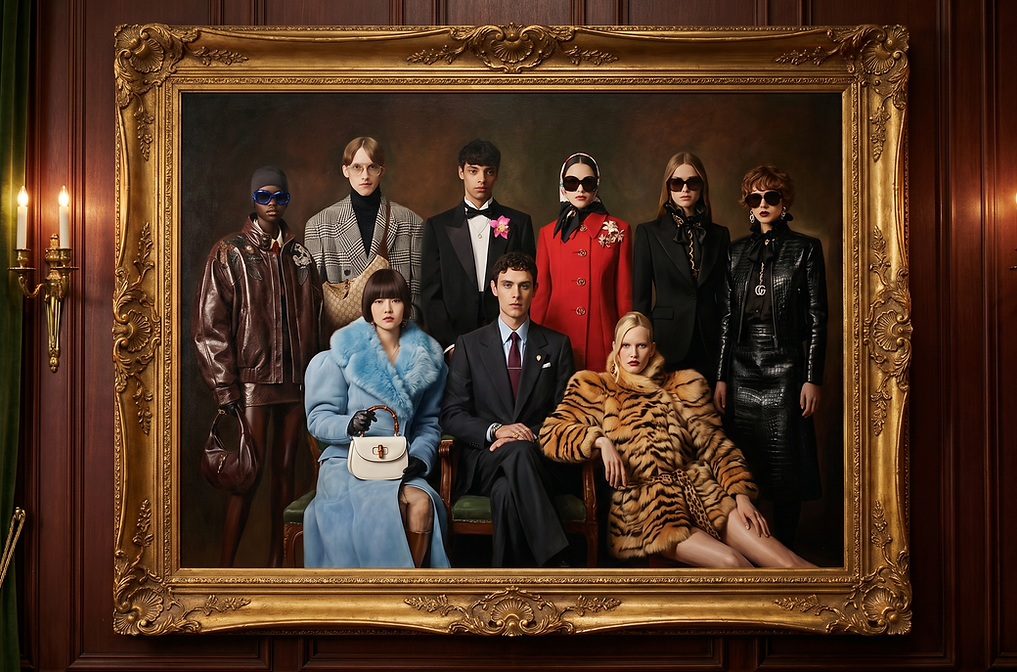
At Gucci, the House has never been one thing. It is a lineage of characters.
Distinct. Expressive. Contradictory
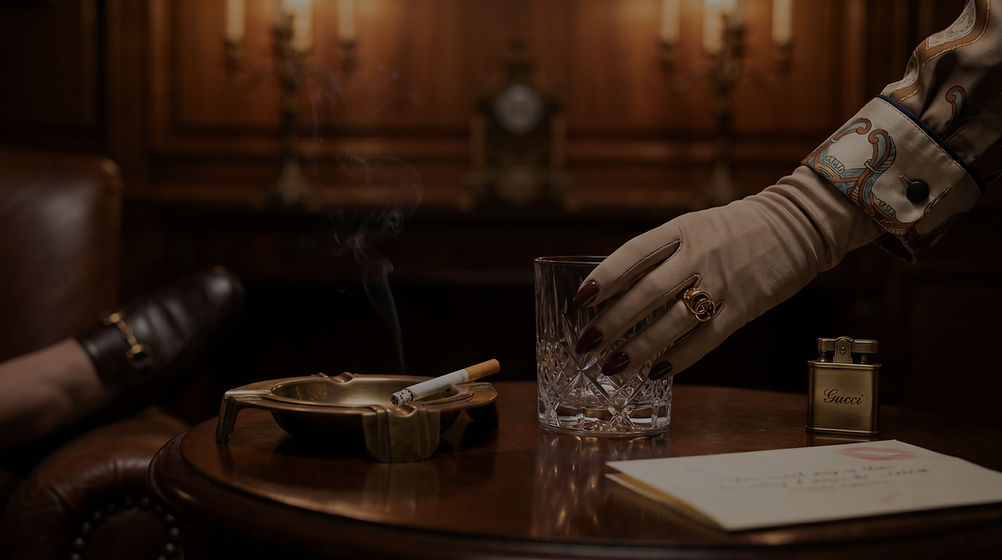
Each one shaping what the House becomes. Not defined by uniformity…
But by tension.

Welcome to the House of Gucci. Welcome to La Famiglia.
Gucci’s Spring/Summer 2026 campaign, La Famiglia, translates the many identities of the House into a cast of exaggerated archetypes: familiar, fashionable, ironic, and slightly absurd. Each character becomes a different expression of Gucci: tradition, glamour, taste, performance, control, seduction, authority, volatility, and innocence.
Together, they form a family not defined by blood, but by attitude, a House made up of contradictions, each one Immaculately and intentionally dressed. This experience takes those archetypes out of the campaign image and places them inside a home. Set within a timeless Italian mansion, La Famiglia becomes a journey through the private worlds of the Gucci House. Each room belongs to a different character, revealing not only what they wear, but how they live, perform, hide, and expose themselves.
The result is a high-fashion satirical exploration of identity, where every room feels beautiful, immersive, and unmistakably Gucci, but also a bit too revealing. A polished surface gives way to something more human, more contradictory, and more sharply observed.In this House, identity is not singular.It is inherited, styled, exaggerated,
and occasionally betrayed. Because Gucci is not one identity. It’s all of them, at once.
THE HOUSE OPENS ITS DOORS
The journey begins before anything is revealed.
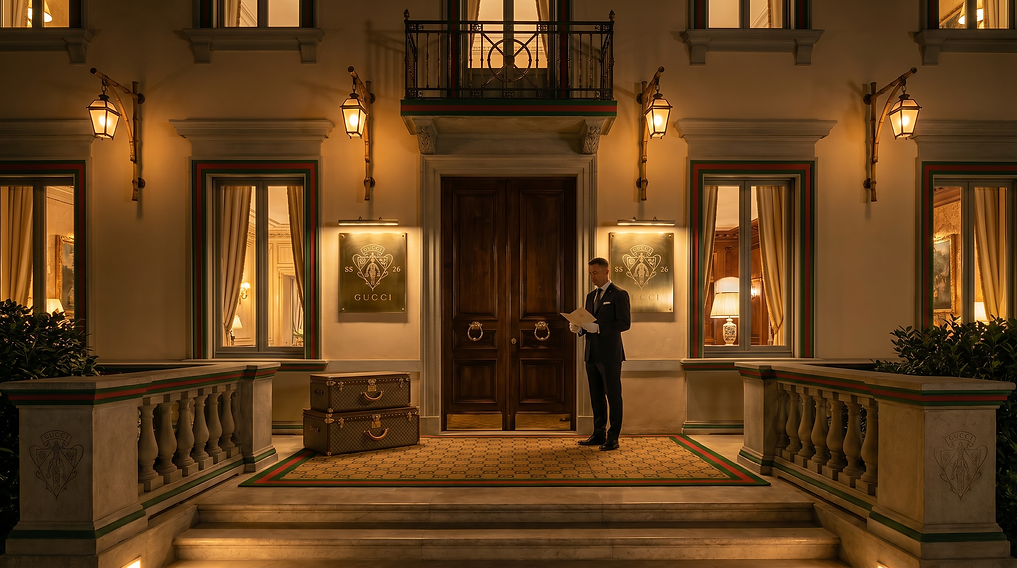
From the outside, La Famiglia’s mansion stands wrapped in darkness, warm windows glowing quietly,
the La Famiglia crest catching the light at the entrance, the door waiting with the confidence of
a House That knows exactly what it is.
There is no grand announcement. No explanation. Just the sense that something already exists behind the door,
a family, a history, a set of rules no one has fully agreed to. A host stands at the threshold, precise and composed.
In gloved hands, he offers a folded map of the House: ivory card, embossed crest, each room marked like a private territory.
It feels like an invitation.
It feels like instruction.


THE HOUSE INTRODUCES ITS LEGACY
Guests step into the House through a grand foyer: composed, symmetrical, and very aware of its own heritage.
At its center, L’Archetipo appears as a sculptural composition of monogrammed trunks, anchoring the experience in Gucci’s origins as a house of travel, craft, and legacy, and subtly reminding you that everything began
with somewhere to go, and something to carry.
Encircling the room, a gallery of portraits introduces the La Famiglia cast of personas, each captured with the kind of conviction that suggests they already know exactly who they are. A discreet butler, dressed in impeccable Gucci tailoring, greets guests on arrival. His presence is composed and just slightly too intentional, as if he’s been rehearsing this moment.
The space is bathed in warm, diffused light, while classical Italian music lingers just long enough to feel appropriate.
A subtle scent of polished wood and leather settles into the air.
The House introduces itself.
Exactly as it intends to be remembered.


THE HOUSE BEGINS TO REVEAL ITSELF
As the House unfolds, guests move beyond shared spaces and into the private worlds of La Famiglia, where things are less presented, and more exposed. Each room operates as an extension of its character. Not staged, but lived-in,
or at least convincingly so. Garments and accessories appear mid-life: worn, removed, abandoned, or reconsidered,
as if the moment simply moved on without them.
The atmosphere shifts intentionally. Lighting isolates or flatters. Sound travels unevenly, you hear a conversation that doesn’t quite belong to the room you’re in, music that cuts in and out, something always happening just beyond reach. Scents linger, sometimes familiar, sometimes harder to place. Objects accumulate with purpose, they stack, collide, contradict.
The collection isn’t displayed. It’s absorbed into behavior that is instinctive, expressive, and occasionally excessive.
Each character exists somewhere between reality and performance, exaggerated enough to feel familiar,
and precise enough to feel constructed.
Because in this House, identity isn’t just worn.
It’s performed, and not always subtly.


SCIURA
THE HOUSE SETTLES INTO TRADITION
The first room reveals a space defined by routine, restraint, and a very specific idea of how things should be done.
The space is classic, soft, and immaculately kept. Powder-blue upholstery, polished wood, porcelain, lace, crystal, and carefully placed Gucci pieces create a world of inherited taste and authority.
Everything suggests order. Garments are folded and maintained with care, less styled, more preserved. The table is set beautifully,
the hospitality feels graceful, the atmosphere polite. Warm lighting and soft classical music sustain a sense of familiarity, while a powdery, almost nostalgic scent lingers, its all composed and slightly too perfect.
And yet, the sweetness feels measured. A few small details on the dessert table say more than they should.
The House begins with control.
But not without tension.


LA BOMBA
THE HOUSE GIVES INTO EXCESS
Leaving behind the restraint of Sciura, the next room reveals La Bomba,
a space that doesn’t ask for attention but takes it anyway.
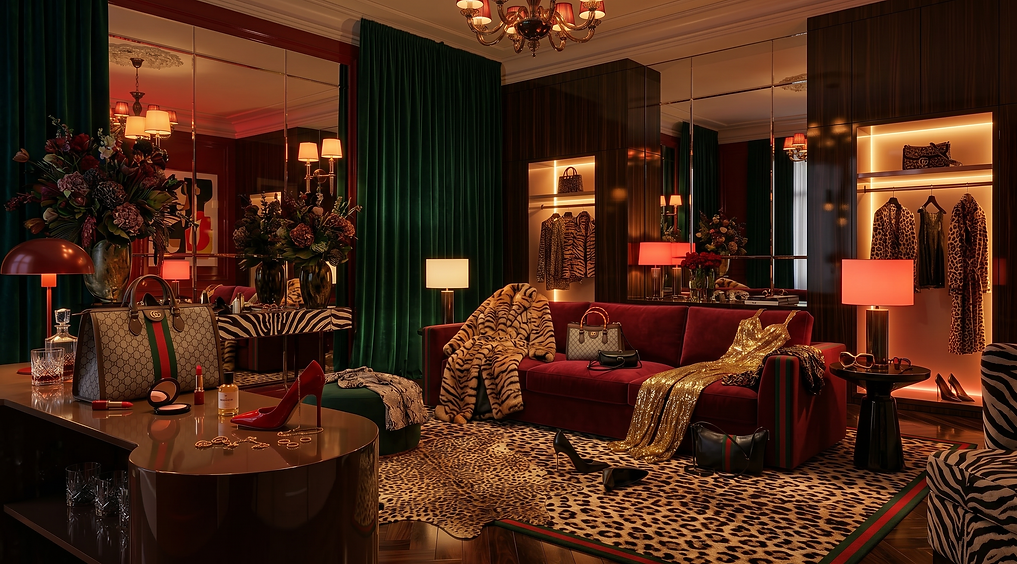
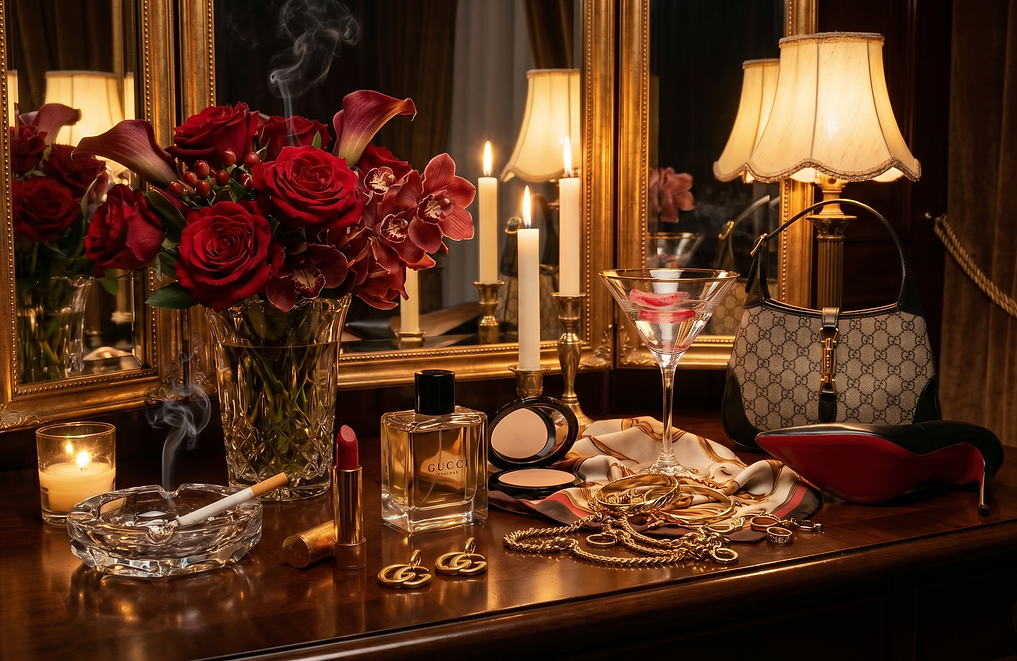
The order of the previous room dissolves almost instantly. Clothes are no longer placed, but left mid-moment, maybe slipped off, abandoned, or thrown aside as if the room has no interest in being composed. The lighting shifts warmer, and heavier. Deep reds, mirrored surfaces, animal textures, gloss, perfume, and soft excess create a room that feels sensual and unapologetically present.
Everything feels intentional, yet slightly too much, elegance pushed into instinct. Somewhere within the womanly glamour, something unexpectedly innocent interrupts the performance,
almost too soft for a room this confident.
The House stops behaving.
And doesn’t seem interested in correcting itself.




GALLERISTA
THE HOUSE RECLAIMS CONTROL
After the excess of La Bomba, the next room reveals Gallerista,
where instinct is replaced with taste,and taste is treated as absolute.
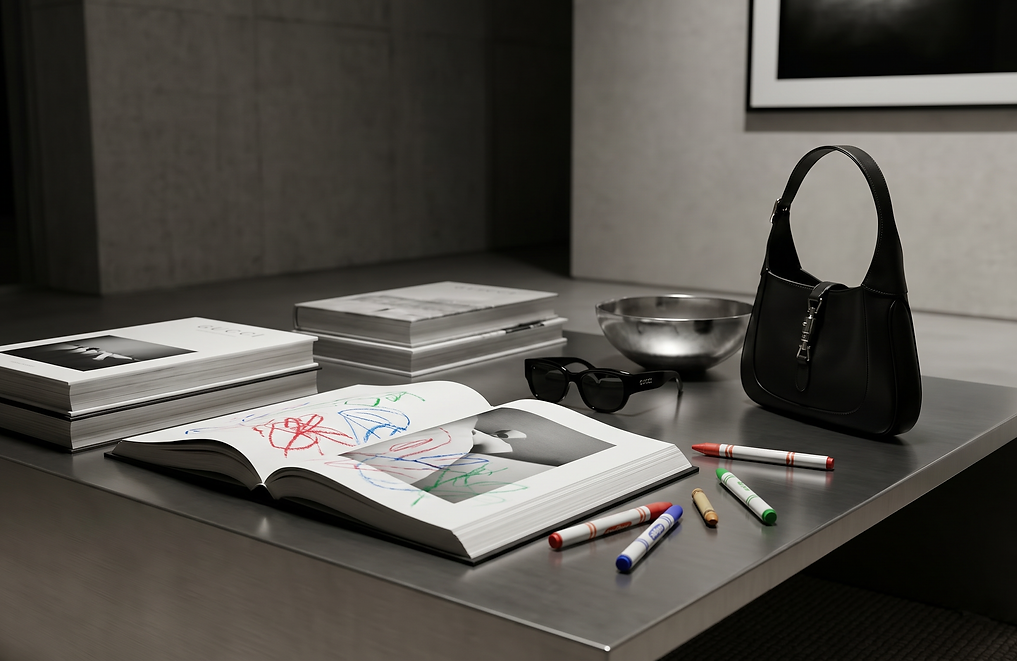
The space is not quite a gallery, but it behaves like one.
A living room sharpened into composition: sculptural furniture, art books, photography, steel racks, and carefully placed garments arranged to be observed rather than worn. Lighting sharpens and sound recedes into near silence. Every object feels selected, every surface is edited, every choice aware of its own authority.
And yet, something has interrupted the edit.
A mark too careless, a page too touched, a trace of color
that doesn’t belong in a world this controlled.
The House edits itself.
And calls it refinement.



L'INFLUENCER
THE HOUSE PERFORMS ITSELF
The next room reveals L’Influencer, where nothing exists unless it is seen.
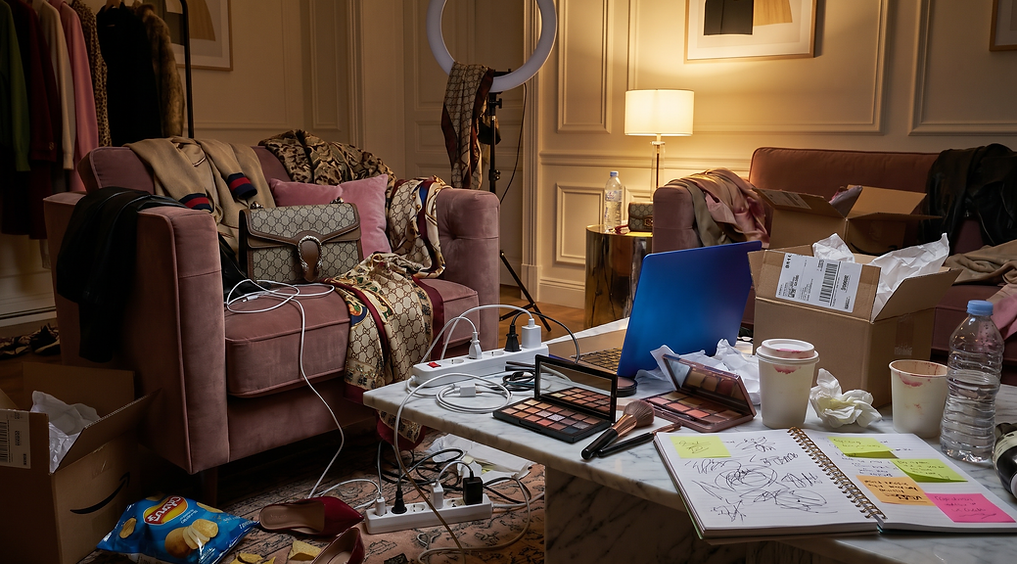
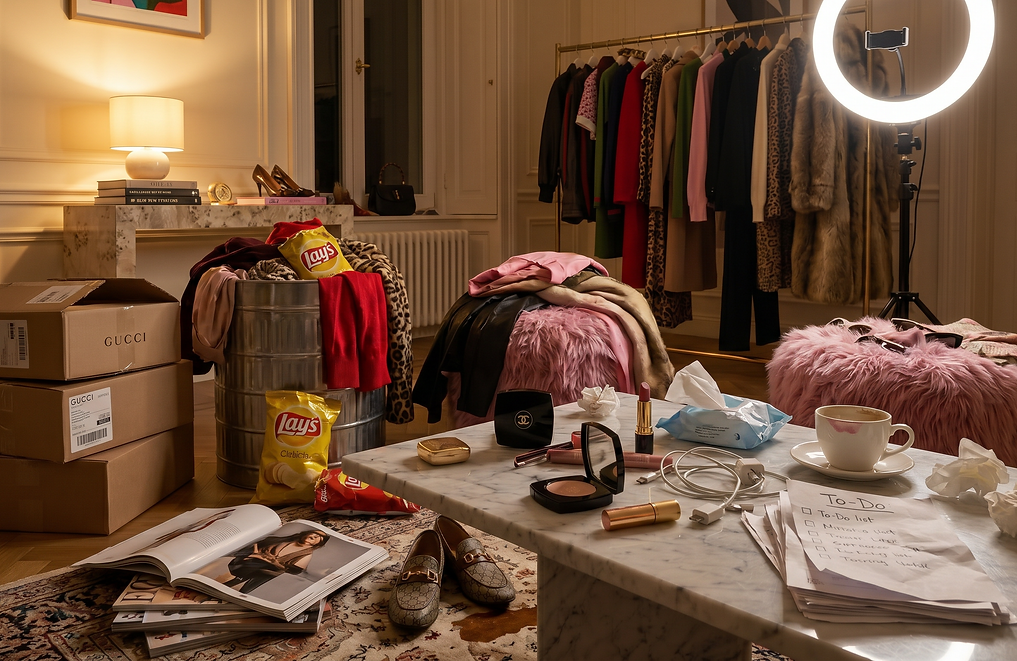
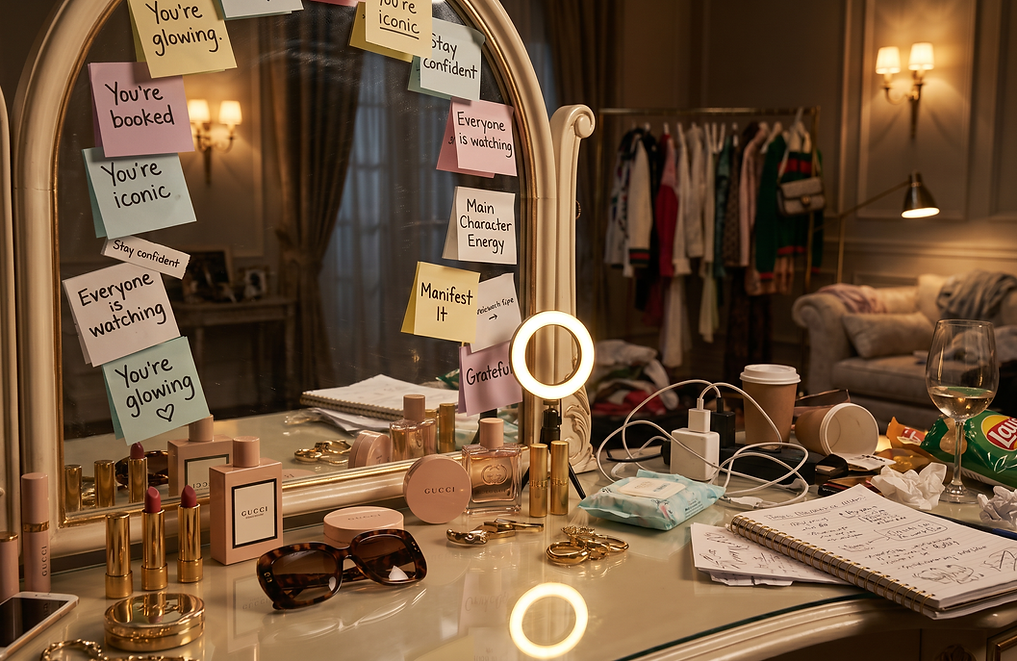
The space is designed for visibility first. Every angle feels intentional; every surface is ready to be captured. Garments are styled for the frame, positioned to be noticed. At first glance, the room is glossy, polished,
and perfectly effortless. Light hits exactly where it should.
Objects appear casually placed. The image is immaculate.
But just beyond the camera, everything begins to unravel.
Ouside the frame is total chaos, clothes piled up, cables tangled, wrappers scattered, beauty products open, notes everywhere.
The room feels less like ease, and more like someone trying
very hard not to lose control.
The House is no longer lived in.
It is broadcast.


LA CATTIVA
THE HOUSE SHARPENS ITS EDGES
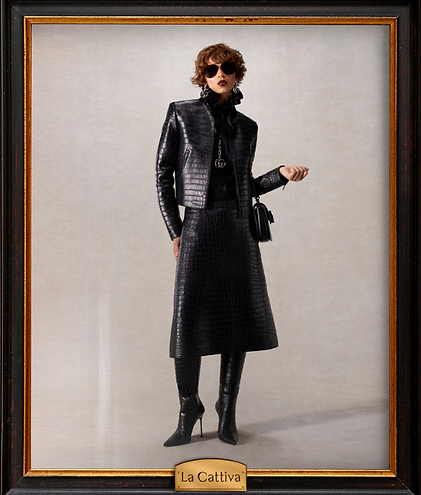
After the performance of L’Influencer, the next room reveals La Cattiva where approval is irrelevant.
The space feels edited, but not for perfection, for control. What remains is deliberate, sharp, and just a little unforgiving. Dark leather, chrome, glass, crocodile textures, and shadow create a room that feels severe and emotionally guarded. Clothes aren’t styled to be admired.
They are worn like decisions that won’t be revisited.
There’s a sense that something has already happened here, something unresolved, and the room has no interest in explaining it.
And yet, among the hard surfaces and controlled darkness, one softer trace remains. Small. Intimate. Almost hidden.
The House stops trying to be understood.


RUBACUORI
THE HOUSE LEARNS TO PERSUADE
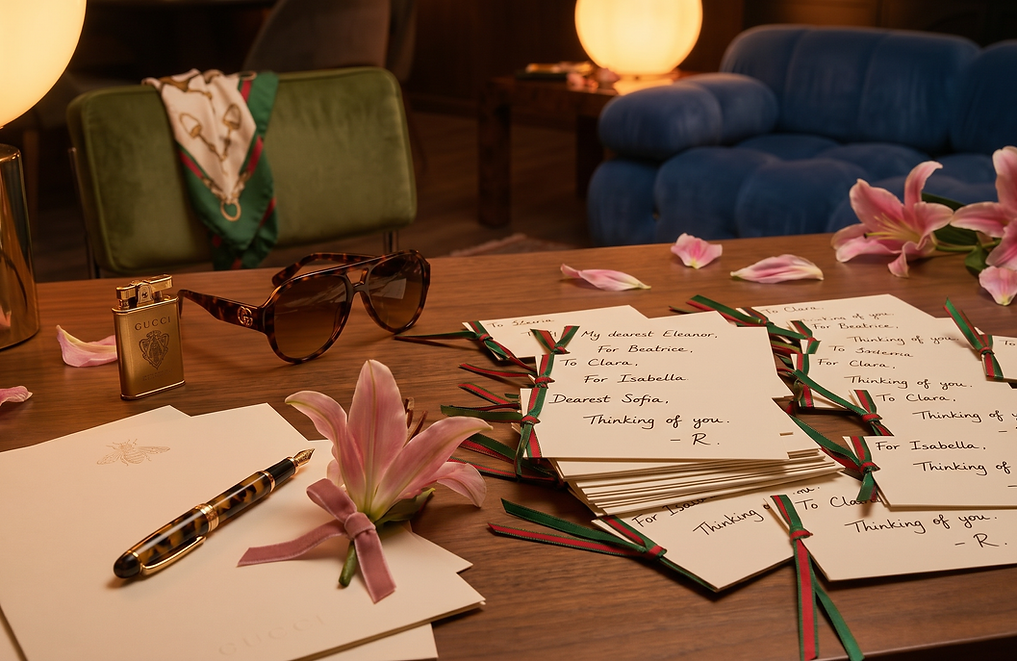
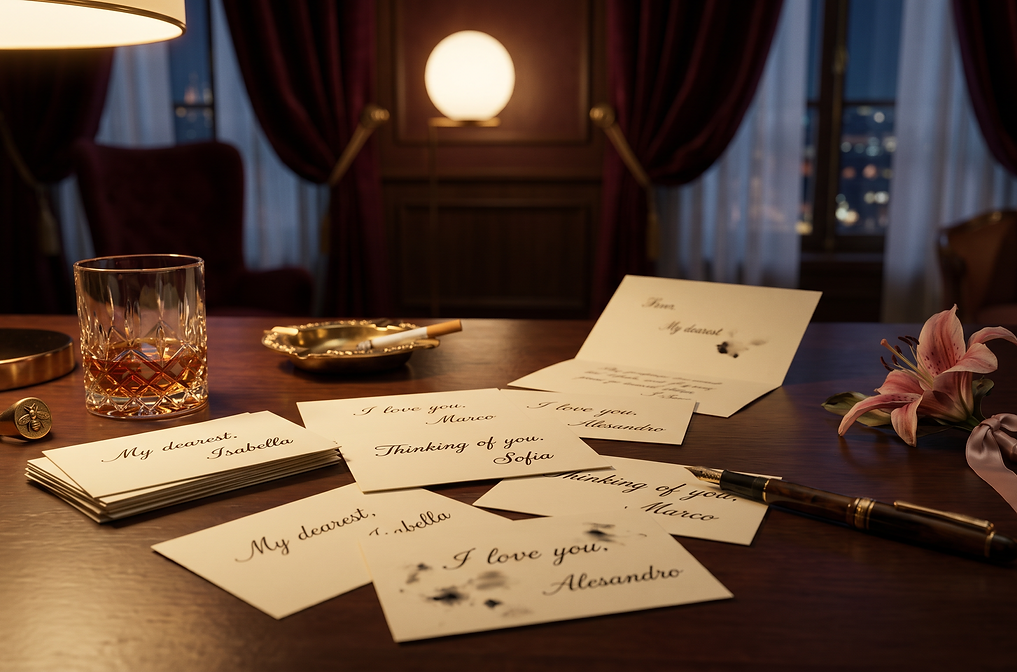
The next room reveals Rubacuori, where charm becomes its own language.The space feels warm, colourful, and inviting. Seating draws you closer. Drinks are half-finished. Garments are left mid-use. Everything suggests intimacy, as if the room has been waiting specifically for you.
He is a talker. A charmer. Someone who knows how to make attention feel personal. There is ease here, but it is a careful one. Every detail feels just right, the flowers, the glassware, the lighting, the words left behind.
It all feels sincere enough to believe.
Until the repetition begins to show. The same gestures appear more
than once. The same words are written again and again.
Names change, but the performance stays almost identical.
The House doesn’t ask for attention.
It makes you feel chosen, even when you are not.



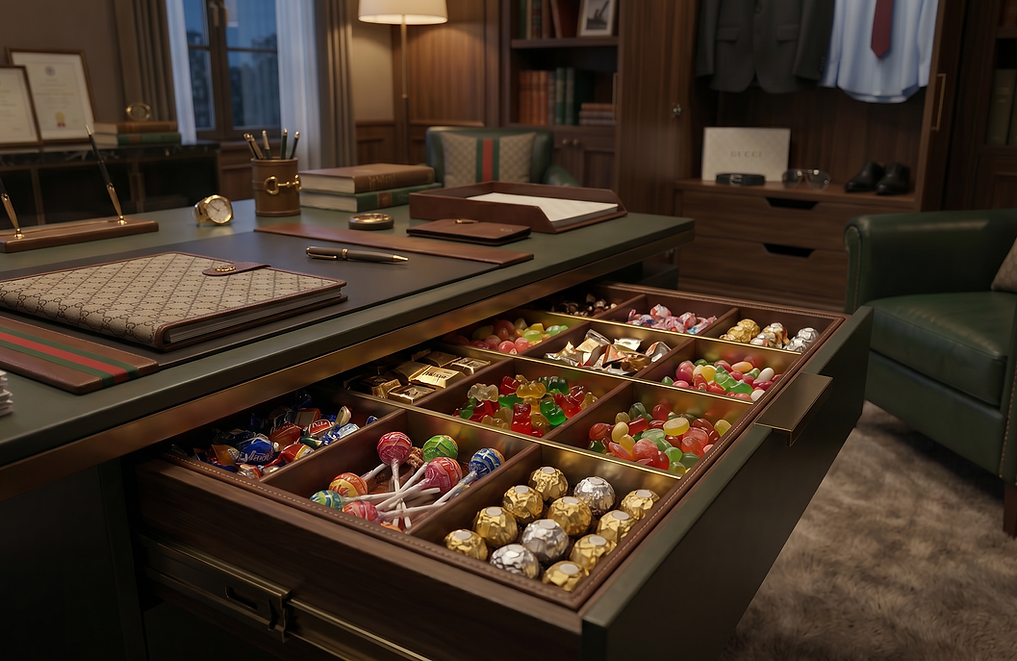
IL DIRETTORE
THE HOUSE TAKES CHARGE
The next room reveals Il Direttore, where everything feels important,
and entirely managed.
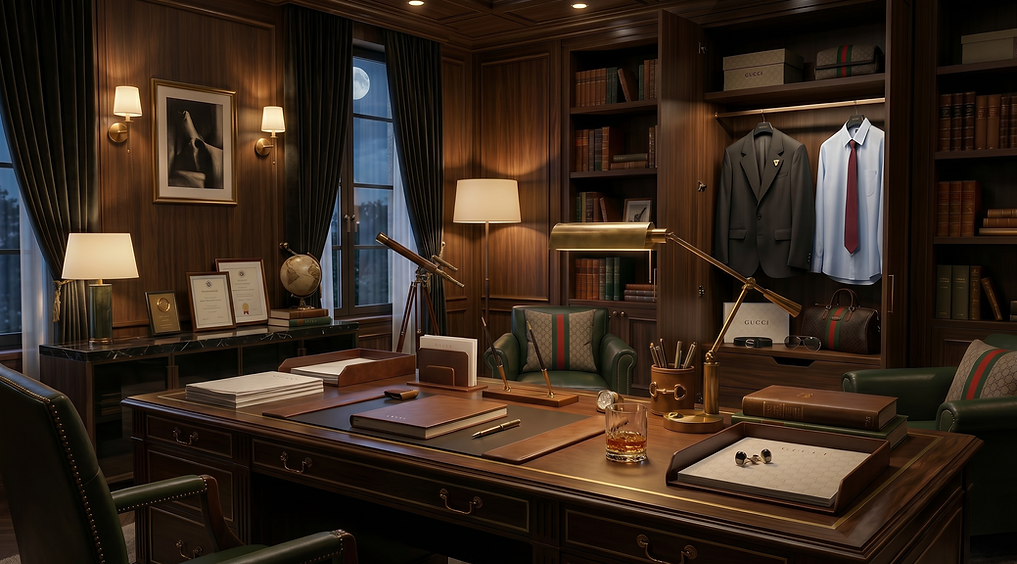
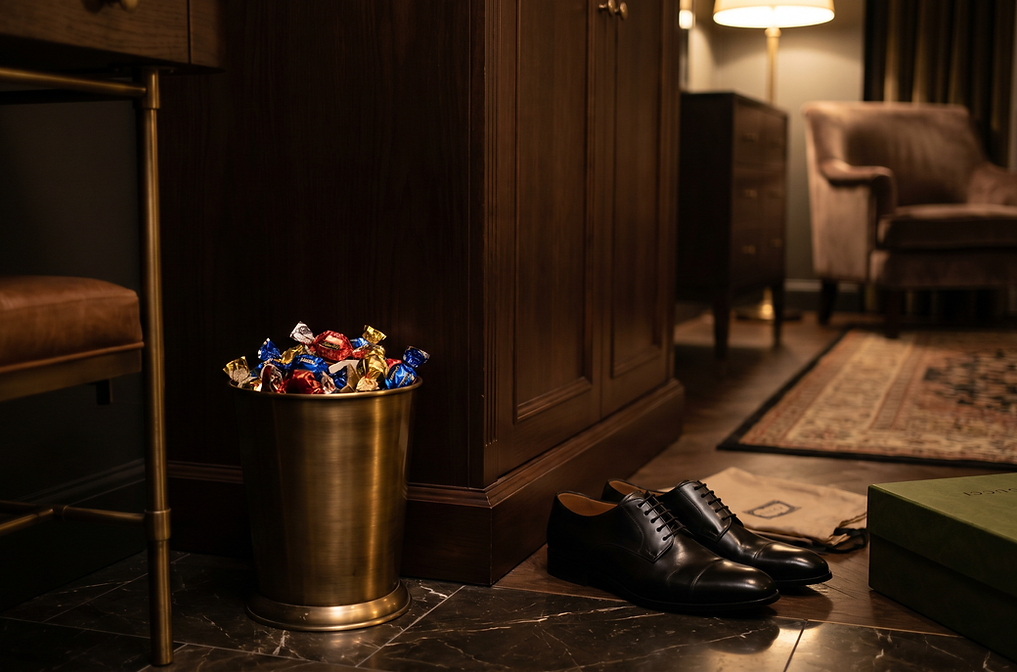
The space is structured around a central desk. Papers sit mid-review, objects remain in use, and nothing exists purely for decoration.
The setting draws from a classic Italian office, but sharpened:
dark woods, clean lines, leather, brass, books, awards, polished shoes,
and a restrained palette that prioritizes function over display.
Garments are integrated into the rhythm of the room, worn, placed, part of a working day rather than a styled moment.There is a subtle urgency to the space. Not chaotic, but efficient. Nothing lingers longer than it needs to. Still, beneath all that discipline, indulgence leaves its trace in a way that is small, excessive, and harder to control than the rest of the room.
The House stops persuading.
It starts deciding.
.png)

.png)

INCAZZATA
THE HOUSE LOSES COMPOSURE
The next room reveals Incazzata, a space where style
and anger occupy the same room.
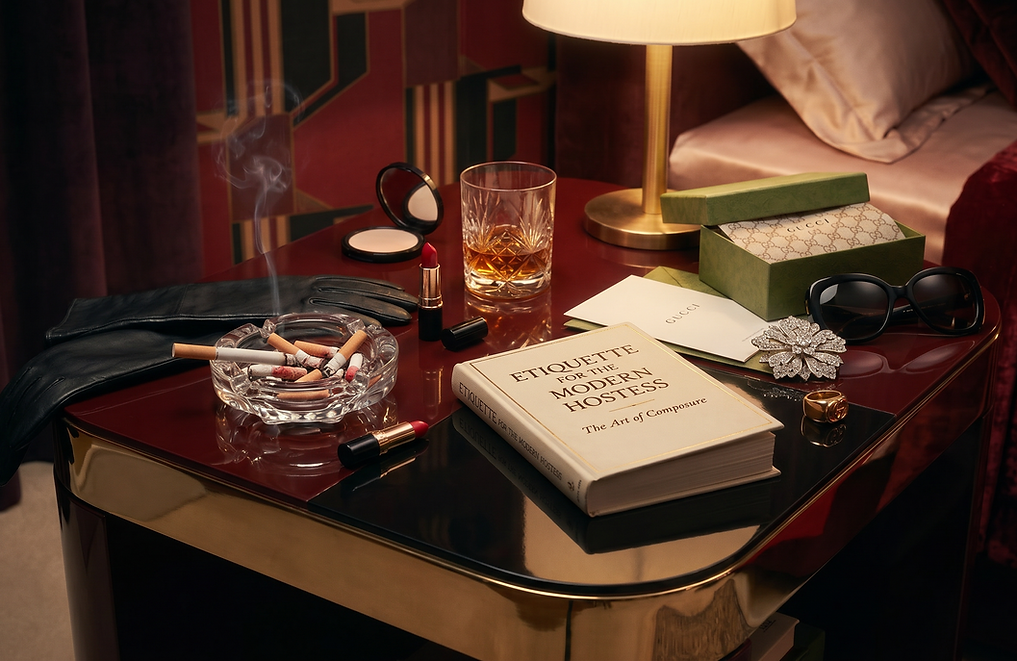
The room is fiery, polished, and volatile, with a sharper 60s MOD influence: red, black, cigarettes, glossy surfaces, angular forms, and elegance under pressure. The space feels impatient and combustible.
Objects are beautiful, but disturbed. A chair sits slightly off.
A drawer is left open. Gloves are thrown down. A cigarette burns too long.
Everything suggests someone has been pacing, dressing, smoking, and losing patience, all with impeccable taste. And yet, even here, there is an attempt to hold the performance together. Something proper remains open, marked,or underlined, as if composure could still be rehearsed.
The House burns.
But still wants to appear composed.


.png)


COCO DI MAMA
THE HOUSE PLAYS INNOCENT
The final private room reveals Cocco di Mamma,
the pampered son of the House.
The space is softer, younger, and more protected than the others.
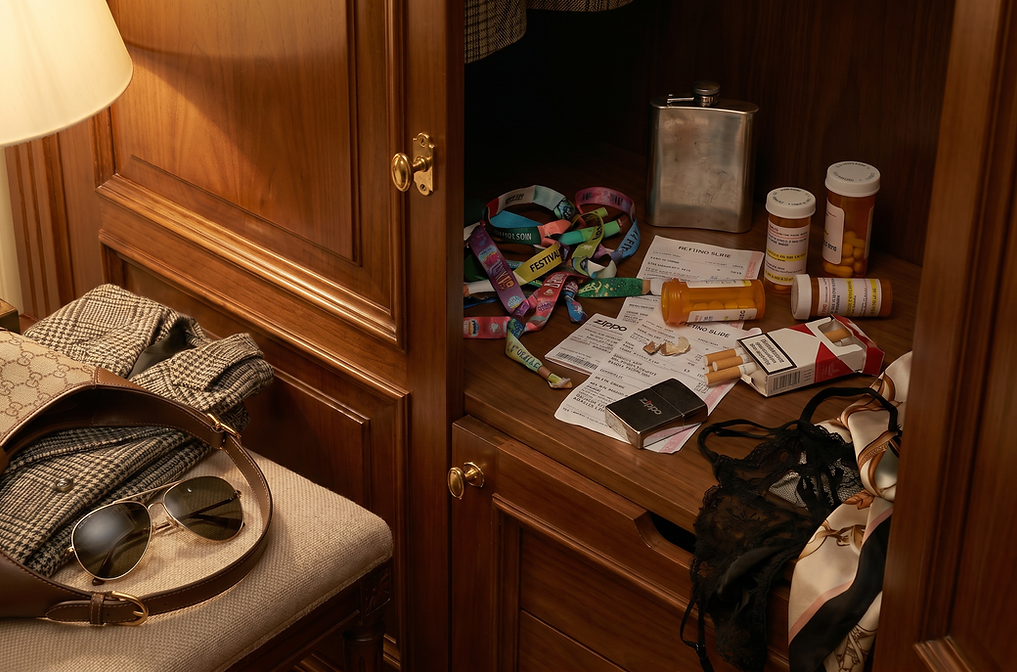
A polished bedroom-study shaped by inherited comfort: neat tailoring, denim, loafers, books, framed memories, soft textiles, and a wardrobe that feels just a little too carefully looked after. Everything suggests he is well brought up. Respectable. Charming. Harmless.
The room carries a certain sweetness, a sense of being cared for, and quietly protected from consequence. But innocence can be useful. Somewhere behind the polished surface, another version of him has been carefullyhidden away.
The House learns that innocence, too,
can be performed.



LA TAVOLA
THE HOUSE GATHERS BUT NEVER AGREES
The journey ends at La Tavola, where the House finally asks every character to sit with themselves.
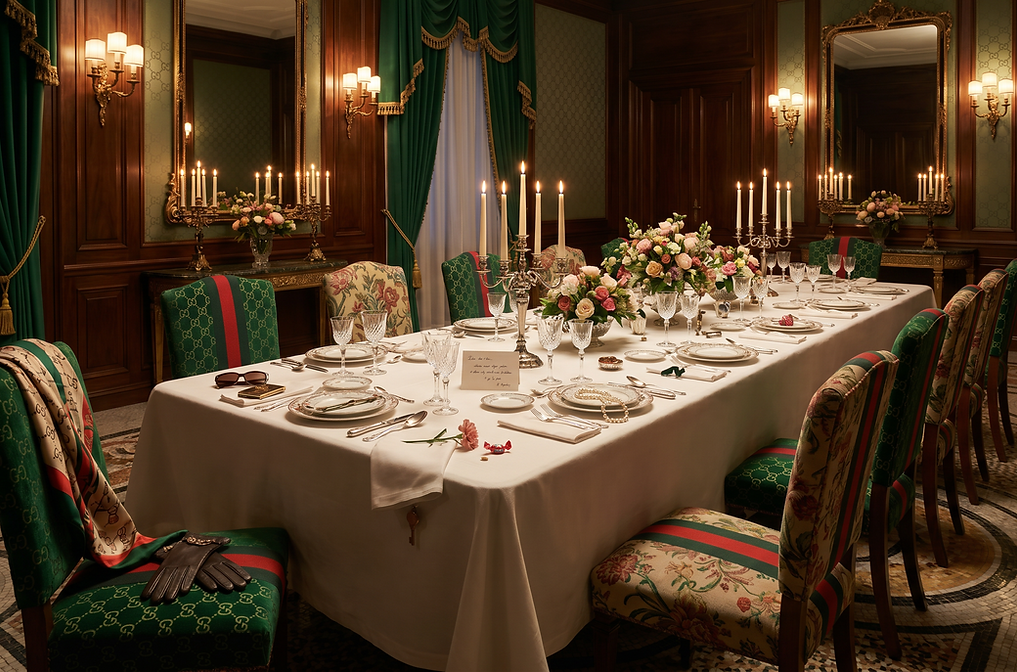
After moving through their private worlds, guests arrive at a dining room set with ceremony:
crystal, candlelight, polished wood, patterned chairs, and the felt pressure of a family table waiting to be occupied.
At first, everything appears composed. Each setting knows its character. Each place performs exactly what it should.
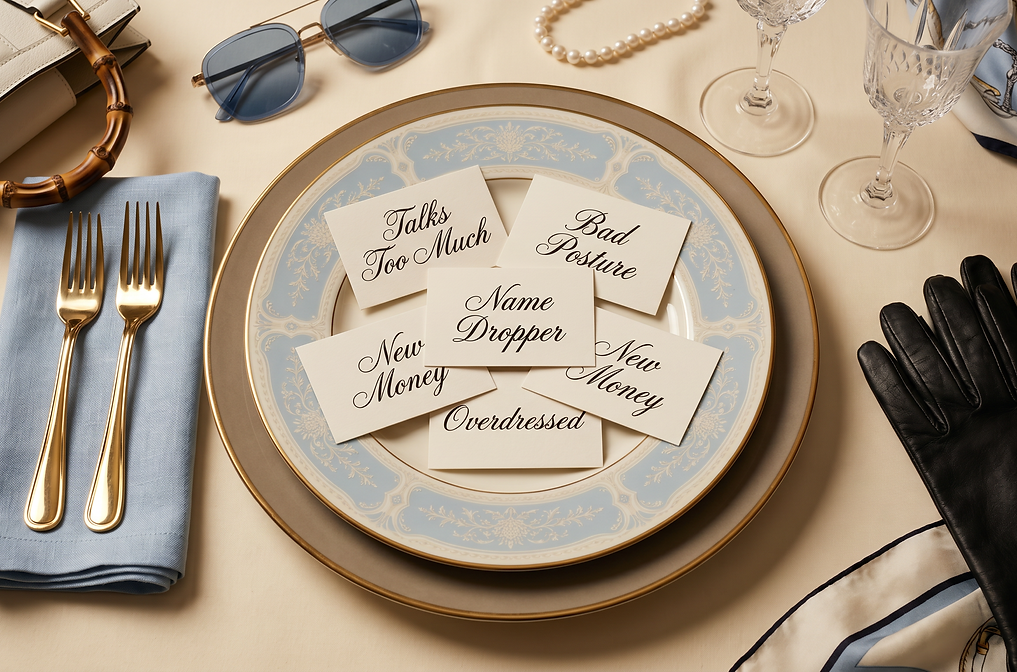
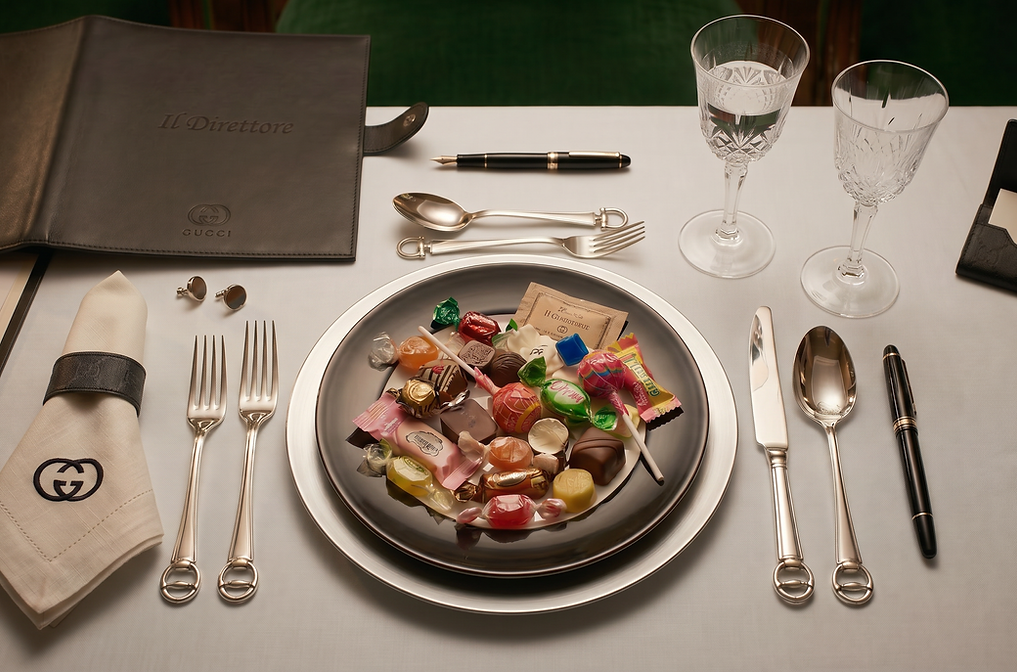
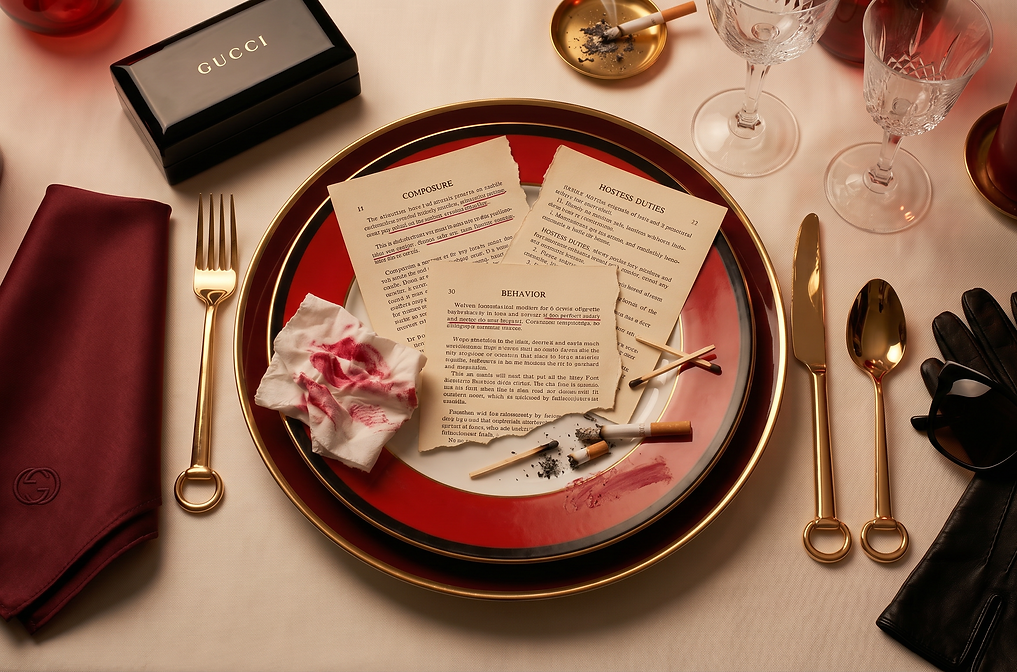
But the plate interrupts the performance. What was hidden in the rooms is no longer tucked away, half-covered, or left in a drawer. Here, it is served back to them. Judgment. Effort. Transaction. Performance. Softness. Repetition.
Indulgence. Composure. Recklessness.
No one can fully hide anymore.
The characters are never shown, but their presence is unmistakable, exposed through the objects, traces,
and contradictions laid neatly before them. A family portrait watches from the room, formal and still.
The table tells a different story.
At the end, the House does not resolve itself. It simply brings every contradiction to dinner.
La Famiglia comes together. But only on its own terms.
.png)




THANK YOU FOR VISITING
